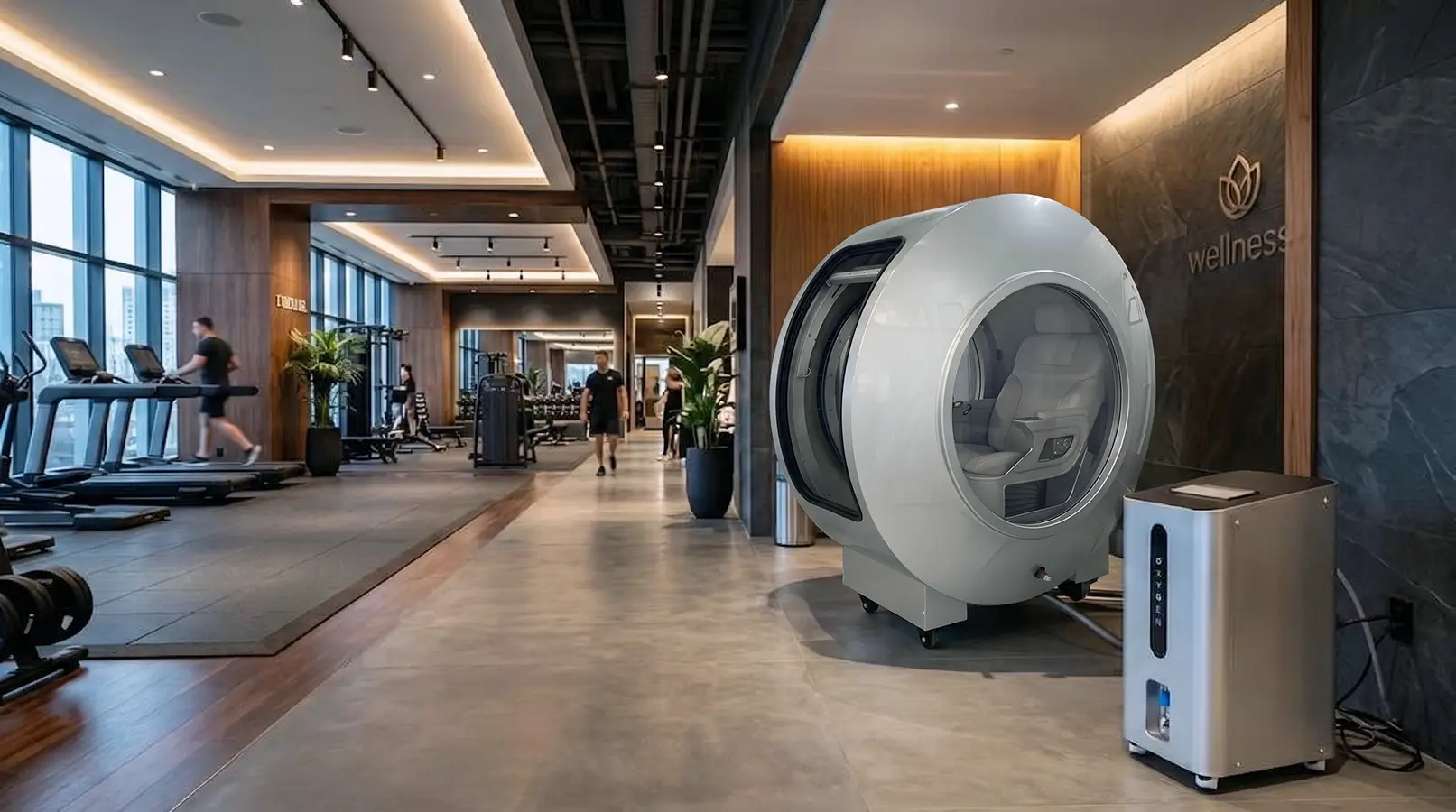
Oxygen Concentrators for Hyperbaric Chambers
A hyperbaric chamber can be the visible centerpiece of a recovery room, but oxygen concentrators often determine how consistently that room performs session after session. They influence oxygen delivery capacity, equipment placement, noise, electrical planning, maintenance requirements, and the overall user experience. For home owners and commercial operators, selecting the chamber without evaluating the oxygen system leaves a critical part of the investment unresolved.
Oxygen concentrators are commonly used with wellness hyperbaric systems to supply concentrated oxygen from room air. They are not pressure vessels, and they do not create chamber pressure. The chamber’s compressor and pressure-control system manage the pressurized environment; the concentrator supplies oxygen through the delivery arrangement specified for the system. Understanding that division of work makes it easier to compare equipment accurately.
What Oxygen Concentrators Do in a Chamber System
An oxygen concentrator draws in ambient air, filters it, and uses molecular sieve technology to separate and concentrate oxygen. The unit then delivers oxygen at a rated flow rate and concentration range. In a hyperbaric wellness environment, that output is typically directed to the user through a purpose-designed interface, following the chamber manufacturer’s operating procedures.
The distinction between flow and concentration matters. Flow is the volume of oxygen the concentrator can provide over time. Concentration, often described as purity, is the percentage of oxygen in that delivered gas. Both can change under operating conditions, particularly as flow demand rises or a unit ages. A buyer should evaluate the rated output at the intended operating flow, rather than relying on a headline specification alone.
For chambers operating at higher pressures, oxygen delivery planning becomes more consequential. A 2.0 ATA pressure vessel, for example, requires an integrated system designed for its operating parameters, controls, and approved delivery method. The appropriate configuration depends on the chamber, the intended number of occupants, session protocol, and equipment manufacturer requirements. More pressure is not a substitute for properly matched oxygen capacity.
Size the Oxygen System for Real Use
The right concentrator is not simply the largest available unit. It is the one that supports the intended chamber configuration and operating schedule with appropriate capacity margin. A single-person reclining chamber used once a day has a different demand profile than a multi-user commercial chamber running scheduled sessions throughout the day.
Home buyers should begin with the practical questions: How many people will use the chamber at one time? Will the system be used occasionally or as part of a regular household wellness routine? Where will the concentrator sit, and how much operating noise is acceptable near bedrooms, offices, or living spaces? A compact unit may suit a dedicated home wellness room well, provided its output matches the chamber’s specified requirements.
Commercial operators need to think beyond a single session. Consecutive appointments place sustained demand on equipment, staff, and the room itself. If a center expects high utilization, concentrator capacity, duty cycle, heat output, service intervals, and replacement planning should be part of the original equipment decision. A polished client experience depends on repeatable operation, not on asking equipment to perform beyond its intended workload.
Multi-user chambers also require careful planning. More seats do not automatically mean a single oxygen source can support each occupant in the same way. The oxygen delivery architecture must be engineered around the specific chamber and its approved occupancy configuration. Operators should not add splitters, change delivery interfaces, or modify gas-routing components without manufacturer direction.
Concentrator Capacity Is Only One Specification
A serious evaluation considers several connected specifications: rated flow, oxygen concentration at the intended flow, duty cycle, electrical demand, acoustic output, physical dimensions, and service access. Each affects ownership.
A high-output unit may offer a stronger fit for a commercial operation, but it can require more floor space, produce more sound, and add heat to the room. Conversely, a quieter compact unit may be appealing for a private suite but may not be appropriate for a high-frequency, multi-client schedule. The best system balances performance with the actual environment in which it will operate.
Room Planning, Power, and Noise
Oxygen equipment should be planned as part of the room, not treated as an accessory to be positioned after installation. Concentrators need adequate ventilation and clearance to draw in air, reject heat, and allow access for routine service. They should be located on a stable surface, protected from spills and heavy dust, and positioned according to manufacturer guidance.
Electrical planning deserves the same attention. Confirm circuit requirements, outlet location, voltage, and whether the chamber compressor, climate-control equipment, and concentrator will share electrical infrastructure. Commercial spaces may need a more deliberate power plan to avoid circuit overloads during operation. The correct approach is to confirm the complete system load before delivery rather than relying on available outlets as the installation plan.
Noise is another ownership consideration that can be underestimated. Concentrators use compressors, cooling fans, and internal valves. Their sound is normal, but placement determines whether it becomes disruptive. In a home, a nearby mechanical closet or properly planned adjacent space may improve the experience. In a wellness center, equipment location should support a calm client environment while preserving airflow and service access. Do not enclose a concentrator in a cabinet or tight closet unless that installation has been specifically approved.
Safety Is a System Requirement
Concentrated oxygen changes the fire-risk profile of a room and must be handled with disciplined operating practices. The core principles are straightforward: keep ignition sources away, prohibit smoking and vaping, follow chamber-specific clothing and material requirements, and use only approved oxygen-delivery components. Oils, aerosol products, petroleum-based materials, and unapproved electronics can be inappropriate in oxygen-enriched settings.
Staff training matters in commercial environments. Every operator should understand startup procedures, pre-session checks, client preparation, monitoring expectations, shutdown steps, and what to do if equipment performance falls outside normal parameters. Written procedures help create operational consistency across shifts and reduce reliance on memory.
For private owners, the same discipline supports confidence and longevity. Read the equipment documentation, maintain a clean operating area, and use the system only as instructed. Hyperbaric wellness equipment is not intended to diagnose, treat, cure, or prevent disease. Questions about personal health status, suitability, or medical care belong with a qualified healthcare professional.
Maintenance Protects Output and Uptime
Concentrators are designed for sustained operation, but they are mechanical equipment and require attention. Intake filters accumulate dust. Internal components wear over time. Oxygen output can decline if service is deferred. Maintenance is therefore not merely an administrative task - it is part of preserving the performance the equipment was selected to provide.
The owner’s manual establishes the required schedule, but buyers should also ask practical service questions before purchase. What routine tasks can the owner or facility team perform? Which work requires a trained technician? How are output and alarms checked? What is the expected process if a unit needs inspection, repair, or replacement? Commercial operators should also ask about downtime planning, because a non-operational oxygen system can interrupt appointments and revenue.
For premium long-term ownership, support matters as much as the original specification. OxyEdge approaches chamber and oxygen-system planning as an integrated equipment decision, with attention to configuration, installation, operating requirements, and U.S.-based technical support. That integrated view is especially valuable when the goal is a refined home installation or a commercial-grade client experience.
Questions to Ask Before You Buy
Before approving a quote, confirm that the proposed oxygen equipment is specifically matched to the chamber model, pressure rating, occupancy configuration, and intended operating schedule. Ask for the rated flow and concentration range at the relevant operating conditions, as well as electrical requirements, physical dimensions, ventilation clearances, noise expectations, warranty coverage, and recommended maintenance intervals.
For commercial facilities, ask how the system supports back-to-back sessions, who performs staff training, and what service response process is available. For home installations, focus on room layout, outlet placement, sound management, and simple access for filters and routine checks. These questions turn an attractive equipment package into a practical ownership plan.
The strongest oxygen-system decision is rarely the one based on a single specification or lowest initial price. It is the one that fits the chamber, the room, the people using it, and the standard of operation you expect to maintain years from now.
Source: https://oxyedge.ai/oxygen-concentrators-hyperbaric-chambers