2.0 ATA Chamber Specifications That Matter
A 2.0 ATA chamber is not simply a higher-pressure version of a standard wellness chamber. At this level, the pressure vessel, oxygen-delivery architecture, climate systems, controls, installation plan, and operator workflow all carry more weight. For a studio owner or luxury home buyer, evaluating 2.0 ATA chamber specifications means looking beyond a headline pressure rating and into the engineering that determines how the equipment performs session after session.
A premium chamber should create a controlled, comfortable, repeatable wellness experience while giving owners a credible long-term equipment platform. The right specification package depends on whether the chamber will serve one private user, a high-throughput recovery studio, an athletic-performance facility, or a hospitality environment where presentation is part of the service.
What 2.0 ATA Actually Means
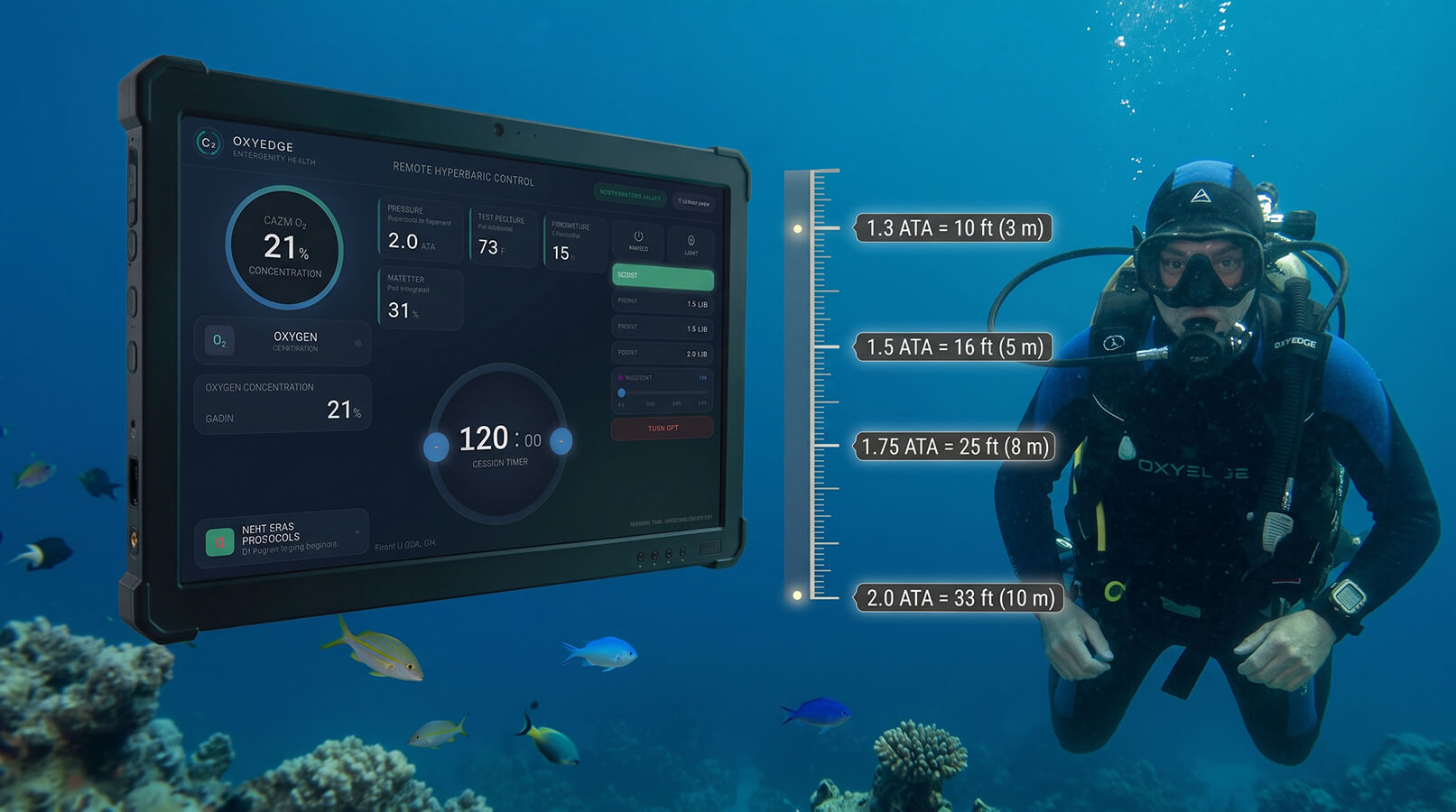
ATA means atmospheres absolute. A 2.0 ATA chamber operates at twice normal atmospheric pressure, or roughly 29.4 pounds per square inch absolute. Because normal atmospheric pressure is already present outside the chamber, the corresponding pressure differential is approximately 14.7 psig.
That distinction matters when comparing products. A chamber advertised by its ATA rating should clearly identify its maximum operating pressure and explain whether the figure is absolute pressure or gauge pressure. Serious buyers should also ask whether that rating is designed for routine sustained operation, rather than an occasional maximum test condition.
Higher pressure changes the requirements placed on the chamber system. The vessel must manage repeated pressurization cycles. Doors, seals, valves, windows, fittings, and penetrations must be selected and assembled for dependable operation under that pressure differential. A 2.0 ATA rating has value only when the surrounding system has been engineered to support it.
2.0 ATA Chamber Specifications Start With the Pressure Vessel
The pressure vessel is the foundation of the chamber. In a hard-shell design, buyers should evaluate the vessel material, wall construction, door design, window configuration, sealing system, and the quality of the internal finish. These are not cosmetic details. They influence structural durability, user confidence, service access, and the overall impression delivered to a paying member or guest.
Commercial operators should prioritize a chamber built for frequent cycling and a polished client experience. A rigid hard-shell cabin generally offers more interior stability and a more substantial feel than a soft-sided design. It can also support design features that matter in premium environments, including upright seating, reclined seating, multi-user layouts, integrated lighting, climate management, and finished exterior panels.
Door geometry deserves close attention. A wide opening improves entry and exit, particularly for guests who may be unfamiliar with enclosed wellness equipment. A well-designed latch and seal system should be intuitive for trained staff while remaining secure throughout a session. Ask how seals are inspected, what consumable components require periodic replacement, and how service is handled if a door adjustment is needed.
Window placement is another practical specification. Large viewing areas can reduce the sense of enclosure for first-time users, but they must be integrated into the vessel design without compromising the equipment’s pressure-management objectives. For operators, visibility can also make external session supervision easier.
Oxygen Delivery Is a Separate System
A chamber’s ATA rating does not tell you how oxygen is delivered to the user. In non-medical mild hyperbaric wellness environments, this distinction should be made clearly. The chamber is pressurized with air, while a separate oxygen concentrator system can provide oxygen through an appropriate personal delivery interface.
Evaluate concentrator output, oxygen concentration range, runtime expectations, maintenance intervals, noise profile, and the number of users the system is intended to support. A single-user chamber and a two-person chamber may have very different delivery requirements. If a facility intends to offer paired sessions, the oxygen configuration should be specified for that use rather than improvised after installation.
Oxygen equipment also affects operations. Concentrators need appropriate placement, airflow, electrical capacity, and a practical maintenance plan. The best setup keeps equipment organized and discreet while allowing staff to complete pre-session checks efficiently. Operators should use written protocols and training appropriate to the equipment, facility, and local requirements.
No chamber or oxygen concentrator should be marketed as a device intended to diagnose, treat, cure, or prevent disease. A premium wellness facility can communicate the experience accurately by focusing on relaxation, recovery routines, performance-oriented wellness, and a controlled environment without making medical claims.
Comfort Systems Determine Whether Clients Return
Pressure is only one part of the guest experience. A client who feels overheated, cramped, or uncertain about the controls is unlikely to view the session as premium, regardless of the chamber’s maximum ATA rating.
Climate control should be a primary purchasing criterion. Compression can influence interior temperature, and several users in a larger cabin add heat quickly. Ask how the system manages temperature during a full session, whether cooling capacity is integrated or external, how air circulation is handled, and whether the chamber is designed for the ambient conditions of the intended installation site.
Interior configuration should match the service model. A reclined single-person chamber can create a private, restorative experience for home users or recovery studios. Seated and walk-in designs can improve accessibility and support facilities that value easy entry, upright comfort, and conversation during multi-user sessions. Electric recliners, massage seating, integrated red light, and refined interior lighting may increase the perceived value of a flagship offering, but only if they remain simple for staff to operate and maintain.
Consider the full arrival-to-exit experience. Can users store personal items nearby? Is communication with staff clear? Is there enough space around the chamber for dignified entry, cleaning, and routine service? These operational details often determine whether equipment feels like a durable business asset or a complicated room feature.
Controls, Monitoring, and Operator Workflow
For a commercial setting, a touchscreen interface is more than a luxury feature. It can standardize session setup, reduce training time, and give staff a clearer view of system status. The interface should present essential information in a direct format, including pressure status, session timing, and relevant equipment functions.
Control systems should also support a deliberate operating routine. Staff need clear procedures for pre-session inspection, guest orientation, pressurization, communication, decompression, cleaning, and post-session reset. A polished interface cannot replace training, but it can make correct operation easier to repeat across shifts.
OxyEdge OS™ is designed around this operator-centric principle, bringing chamber functions into a modern control environment rather than treating the chamber as a purely mechanical enclosure. For buyers comparing systems, ask what controls are integrated, which features are manually managed, how diagnostics are presented, and what technical support is available after installation.
Communication is equally significant. Clients should have a practical method to communicate during a session, and operators need clear processes for supervision and response. The specific approach will depend on the chamber layout and facility model, but it should be established before the chamber becomes part of the schedule.
Installation Specifications Can Shape the Purchase Decision
A 2.0 ATA chamber must fit the building as well as the business plan. Measure more than the finished footprint. Account for delivery access, hallways, door clearances, equipment-room space, ventilation, electrical requirements, flooring capacity, service clearance, and the path technicians will use for future maintenance.
Larger walk-in and multi-user chambers can be compelling revenue tools, but their installation demands are correspondingly greater. A smaller chamber may be the better investment for a boutique studio with limited square footage, while a larger configuration can make sense for a membership-based recovery concept that needs simultaneous sessions. There is no universal best layout - the right choice depends on throughput targets, staffing, room constraints, and the price point of the service menu.
Before placing an order, request a documented site-preparation package and review it with the appropriate building, electrical, and facilities professionals. Confirm the delivery plan, commissioning process, training scope, warranty terms, maintenance expectations, and support path. U.S.-based support and clear technical documentation can reduce downtime when the equipment becomes part of daily operations.
The Specification Questions Worth Asking
A productive sales conversation should move beyond “What is the price?” Ask whether the 2.0 ATA rating is the maximum intended operating pressure, how the vessel is designed for repeated use, what oxygen system is included, and how temperature is controlled. Clarify the internal dimensions, usable seating or recline configuration, maximum occupancy, electrical needs, included accessories, and recommended service intervals.
Also ask for the ownership picture. A premium chamber is capital equipment, not a short-term accessory. The useful comparison includes warranty coverage, replacement-part availability, installation coordination, staff training, technical support, and the ability to maintain a consistent guest experience as the facility grows.
The strongest 2.0 ATA chamber specification is the one that aligns pressure capability with vessel engineering, operator control, user comfort, and a realistic installation plan. When those elements are evaluated together, buyers can select equipment that looks credible on day one and remains a confident part of the wellness experience long after the launch period.