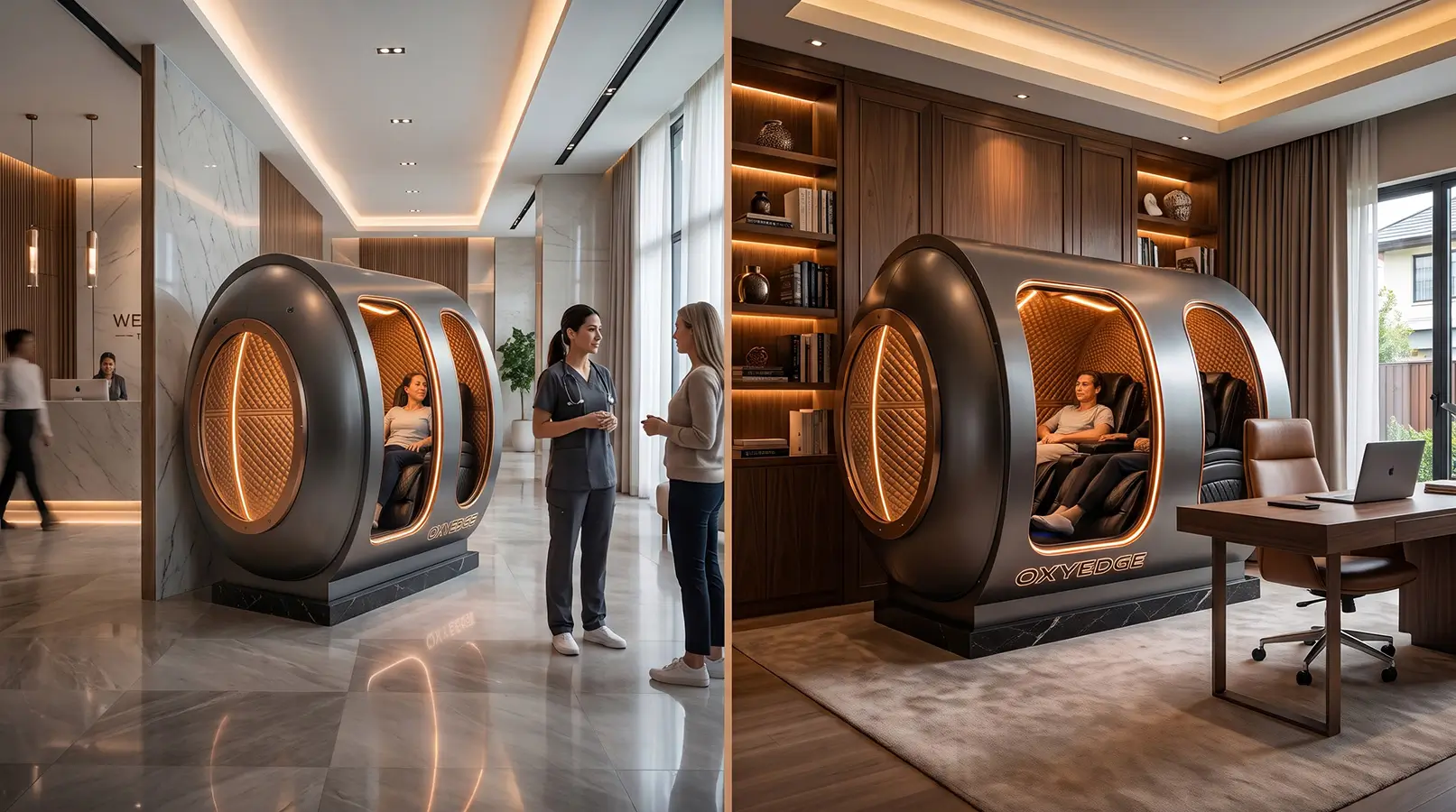
Home Versus Commercial Chambers: Key Differences
A chamber installed in a private residence and one placed in a high-traffic recovery studio may look similar from the outside. The real distinction in home versus commercial chambers is not simply size or price. It is the operating model behind the equipment: who uses it, how often it runs, how sessions are managed, and what happens when the system needs support.
For a homeowner, the priority is often personal comfort, straightforward operation, and confidence in long-term ownership. For a wellness-center operator, the chamber must also perform as a premium business asset. It needs to support sustained operation, present well to paying clients, fit into staff workflows, and help create a consistent session experience day after day.
Home Versus Commercial Chambers Starts With Duty Cycle
Duty cycle is one of the most practical ways to compare chamber categories. A home chamber may be used by one person or a family a few times each week. A commercial chamber may be scheduled for multiple sessions per day, with limited downtime between users. That difference affects component selection, ventilation planning, interior materials, controls, service access, and expected wear.
A commercial environment also introduces variables that do not exist in most homes. Staff members may operate the system. Clients may arrive with different comfort preferences and levels of familiarity. The room may need to be reset quickly between appointments. The equipment must continue to feel polished after repeated entries, exits, cleaning cycles, and daily use.
This is why serious operators should look beyond a chamber's headline pressure rating. A pressure vessel designed for sustained operation, paired with commercial-grade controls and support infrastructure, is often more relevant to long-term ownership than a single specification viewed in isolation.
Pressure Is Important, but It Is Not the Whole Decision
Pressure capability deserves careful evaluation. Hard-shell mild hyperbaric chambers may operate at different maximum pressures, and systems rated up to 2.0 ATA are positioned differently than lower-pressure options. For buyers comparing models, the relevant questions are whether the stated pressure is supported by the chamber design, how the system manages pressurization and depressurization, and what equipment is included in the complete installation.
A premium chamber is a system, not just an enclosure. Oxygen concentrators, climate control, communications, controls, seating, electrical requirements, and installation conditions all influence the user experience. In a commercial setting, those details also affect session timing and staff confidence.
Mild hyperbaric equipment should be understood as non-medical wellness equipment. It is not intended to diagnose, treat, cure, or prevent disease. Operators should maintain clear wellness positioning, provide appropriate education, and follow manufacturer operating guidance for every session.
The User Experience Changes the Ideal Configuration
At home, space and personal routine typically drive the configuration. A single-person reclined chamber can make sense for a buyer who values a dedicated, private recovery environment without converting a large portion of the home. A seated, vertical, or walk-in design may be better for buyers who prioritize easier entry, roomier interiors, or the ability to read, work, or relax in an upright position.
Commercial buyers must consider the client journey from the moment a guest enters the room. A chamber becomes part of the facility's visual standard. A cramped or dated presentation can undermine an otherwise premium membership offering, while an elegant hard-shell design, refined interior, and intuitive touchscreen control can reinforce the quality of the entire brand.
Multi-user capacity is another major dividing line. Two-person and larger walk-in configurations can support shared sessions, concierge-style hospitality, or specialized facility workflows. But more capacity is not automatically better. Larger chambers require more floor space, more deliberate room planning, and a clear reason for the additional investment. A boutique studio with appointment-based traffic may earn more from multiple efficient private rooms than from one oversized installation.
Comfort Is an Operational Feature
Comfort is sometimes treated as a luxury add-on. For premium wellness businesses, it is an operational feature. If a client struggles with entry, feels too warm, cannot communicate easily, or finds the seating uncomfortable, staff must spend more time managing the session and the likelihood of repeat bookings can fall.
Features such as climate control, accessible entry, electric recliners, massage seating, integrated red light, and touchscreen interfaces can change how a session feels. They can also help a facility distinguish its offering from a basic equipment installation. The right configuration depends on the service menu, local market, membership structure, and the experience the operator intends to sell.
For home buyers, those same features can matter for a different reason: consistent use. Equipment that is easy to enter, simple to control, and pleasant to spend time in is more likely to become part of a regular wellness routine.
Controls, Staffing, and Session Consistency
A homeowner can learn one chamber and develop a personal routine around it. A commercial operation needs repeatability across employees, shifts, and client appointments. This is where interface design and training become central purchasing criteria.
Touchscreen control can reduce unnecessary complexity, but only if the interface is designed around real operating steps. Staff should be able to prepare the chamber, guide a client through the session process, monitor standard indicators, and return the room to service without improvising. Clear operating procedures matter as much as hardware.
Commercial buyers should ask how training is delivered, what documentation is provided, and how technical support works after installation. They should also consider whether the system provides the control visibility needed for a professional environment. OxyEdge OS™ is designed around this type of operator-focused chamber management, helping bring a more refined control experience to premium hard-shell chamber installations.
For home use, simpler operation is still valuable. The difference is that home buyers usually need fewer staff-oriented features and less formal workflow design. They may place more weight on quiet operation, room aesthetics, and whether the chamber fits naturally into an existing home gym, recovery suite, or dedicated wellness room.
Commercial Ownership Requires a Business Case
A chamber can be personally valuable at home without generating direct revenue. In a commercial setting, the purchase should be evaluated as capital equipment with a defined role in the business.
The strongest business cases begin with utilization, not optimistic pricing. How many sessions can the facility realistically deliver each day? How much time is needed for check-in, chamber preparation, cleaning, and turnover? Is the chamber offered as a standalone appointment, a membership inclusion, or part of a premium recovery package? Those decisions determine whether a single-person chamber, a two-person model, or a broader multi-modality room makes financial sense.
Operators should also account for the less visible costs of ownership: room buildout, electrical planning, delivery coordination, installation, staff training, cleaning procedures, and ongoing support. A lower acquisition price can become expensive if the unit creates frequent interruptions, delivers a weak client experience, or lacks the backing needed to keep the service menu running.
That does not mean every facility needs the largest or most feature-rich chamber. A well-selected flagship unit in a highly utilized room can be a stronger investment than an oversized system that does not match demand. The goal is fit, not excess.
Support and Service Matter More After Delivery
The quality of support is easy to underestimate before a purchase. It becomes highly visible once the chamber is installed. Homeowners need dependable guidance because they may not have an on-site facilities team. Commercial operators need responsive support because an out-of-service chamber can disrupt booked appointments and member expectations.
Ask direct questions about warranty coverage, technical support location, replacement-part availability, delivery coordination, installation resources, and escalation procedures. For U.S. buyers making a significant equipment investment, U.S.-based support can be a meaningful advantage when questions arise around setup or ongoing operation.
A premium chamber should not feel like a one-time transaction. It should be supported as a long-term ownership platform, whether it serves one household or an entire client base.
Choose for the Environment You Are Building
The best choice is rarely “home” or “commercial” in the abstract. A high-end homeowner may want commercial-grade construction, advanced controls, and the same refined comfort expected in a professional recovery facility. A new studio may need a focused, single-user chamber rather than a large multi-user installation.
Start with the environment you are building, the frequency of expected use, and the experience each user should have when the door closes. That perspective turns a chamber comparison into a clearer equipment decision - one that supports both the space you have now and the standard you intend to maintain over time.