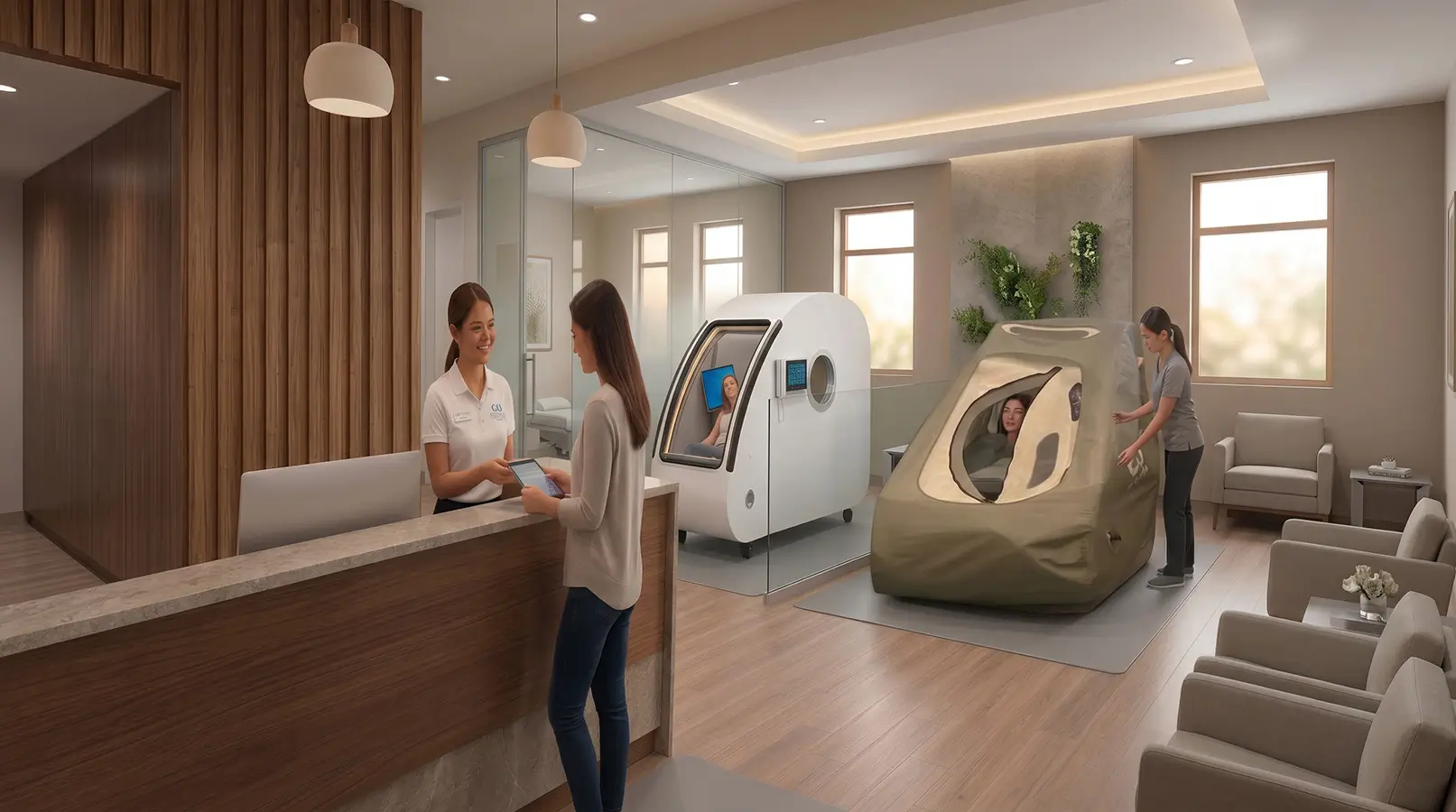
Hard Shell Versus Soft Chamber: Which Fits?
A hard shell versus soft chamber comparison is not simply a question of price or appearance. It is a decision about pressure capability, member experience, staffing, installation, long-term serviceability, and how seriously a facility intends to position its recovery offering. For a private owner, the right answer may be a compact system that fits cleanly into a dedicated wellness room. For a studio or hospitality operator, it is usually the chamber that can deliver a polished, repeatable session experience under sustained daily use.
Soft-sided and rigid mild hyperbaric chambers can both have a place in non-medical wellness environments. The key is to compare the complete operating system, not just the chamber’s exterior or an advertised starting price.
Hard Shell Versus Soft Chamber: The Core Difference
A soft chamber uses a flexible, pressurized fabric enclosure. It is commonly supported by an external frame or internal air-filled structure and generally uses one or more zippers for entry. Many soft chambers are designed for lower-pressure operation, often around 1.3 ATA, although specifications vary by manufacturer and model.
A hard-shell chamber uses a rigid pressure vessel, typically built from engineered acrylic, composite, or metal structural components. This construction supports a more substantial cabin environment, more precise integrated controls, and, in certain models, higher mild-pressure operation. Premium hard-shell systems can operate up to 2.0 ATA when engineered and rated for that range.
Neither format should be treated as universally better. A soft chamber can be a practical entry point for an individual with limited space, a lower initial budget, and modest expectations around session format. A hard-shell chamber is typically the stronger fit when comfort, commercial presentation, higher pressure capability, operator control, and long-term ownership matter more than the lowest acquisition cost.
Pressure Rating Is More Than a Number
ATA, or atmospheres absolute, is one of the first specifications serious buyers compare. It should also be one of the first specifications they put into context.
A lower-pressure soft chamber may suit an owner who wants a simple, personal wellness setup. However, a commercial operator should consider how pressure capability aligns with the experience they plan to deliver, the customer expectations they are setting, and the way the system will be used throughout the week. A chamber rated up to 2.0 ATA occupies a different equipment category from a low-pressure fabric enclosure, requiring a more substantial pressure-vessel design and a more deliberate facility plan.
Pressure alone does not define quality. Control systems, air exchange, oxygen-concentrator output, temperature management, seating, noise, entry design, and service support all influence the actual session. It is also essential to maintain disciplined language: mild hyperbaric chambers are wellness equipment and are not intended to diagnose, treat, cure, or prevent disease. Operators should never allow an ATA figure to become a shortcut for medical claims.
Comfort Drives Utilization and Retention
The customer experience inside the chamber often separates a premium recovery service from a basic equipment offering. Soft chambers can feel confined because the walls move with the pressure environment, the entry is typically horizontal, and users may lie on a pad for the full session. That may be acceptable for a home user who values compact storage and does not need a hospitality-level experience.
Rigid chambers create more options. Depending on the configuration, a user may sit upright, recline electrically, enter through a door rather than a zipper, or share a session with another guest. Seated, vertical, walk-in, and multi-person designs can make a material difference for guests who are less comfortable in enclosed spaces, have mobility limitations, or simply expect luxury-level comfort from a premium membership or recovery appointment.
Climate control matters as well. Pressurized sessions generate practical comfort considerations, especially in facilities operating several appointments a day. Integrated cooling, ventilation, communication features, and touchscreen controls help staff deliver a consistent environment rather than asking a guest to adapt to the limitations of the equipment.
For an operator, the question is straightforward: would a first-time guest feel confident stepping into this chamber, and would they want to book it again? A more comfortable environment can improve perceived value without making exaggerated wellness promises.
Commercial Workflow Favors Purpose-Built Rigid Systems
A chamber purchase should be evaluated as an operating asset. That means looking beyond the initial session to turnover, cleaning, staff training, scheduling, and uptime.
Soft chambers can require more hands-on setup and careful zipper handling. Their flexible materials also demand consistent inspection and cleaning practices. These characteristics do not make them unsuitable, but they can become a friction point when multiple staff members are serving a full schedule or when the chamber is part of a polished, high-ticket recovery circuit.
A commercial-grade hard-shell system is generally designed around repeatable operation. Rigid doors, integrated touchscreen interfaces, automated pressure controls, and defined seating can simplify the guest journey. Staff can prepare the chamber, guide the client through entry, monitor the session according to facility procedures, and return the room to service with a more standardized process.
This is especially relevant in boutique wellness centers, athletic-performance facilities, luxury hospitality properties, and membership businesses. In these settings, equipment must look intentional in the room, withstand regular use, and support an experience that staff can explain with confidence. A chamber that appears clinical, improvised, or difficult to enter may undermine an otherwise premium space.
OxyEdge hard-shell chambers are designed around this operator reality, pairing pressure-vessel construction with touchscreen control, climate-management features, high-output oxygen concentrators, and configurations ranging from single-user reclined models to walk-in and multi-user systems.
Installation, Footprint, and Facility Planning
Soft chambers have an obvious advantage in portability. Many can be placed in a home room with a suitable electrical supply and can be relocated more easily than a rigid vessel. Their smaller investment can also make them attractive for an owner testing personal interest before committing to a dedicated wellness buildout.
Hard-shell chambers require more planning, but that planning is often appropriate for a major capital-equipment purchase. Buyers should account for room dimensions, door clearances, delivery path, flooring, electrical requirements, ventilation, access around the equipment, and service clearance. A two-person or walk-in chamber may create a far stronger customer experience, but it must be selected around the actual room rather than a floor-plan estimate.
The right supplier should help identify these requirements before shipment. Delivery coordination, installation resources, onboarding, and U.S.-based technical support are not minor extras when a chamber is central to a facility launch. They reduce avoidable delays and help owners build operating procedures around the equipment from day one.
Durability, Support, and the Real Cost of Ownership
The lower purchase price of a soft chamber can be compelling, particularly for a home buyer. Yet price should be weighed against expected use, replacement components, downtime exposure, warranty terms, and how long the system needs to remain customer-facing.
A fabric enclosure, zipper system, and portable accessory package may be appropriate for occasional individual use. A high-traffic studio has different demands. It needs equipment that can handle repeated entry cycles, frequent sanitation, staff operation, and the scrutiny of paying guests. Rigid chamber construction is often better aligned with that sustained-operation profile.
Ask every supplier specific questions: What is the pressure rating? Is the rating clearly documented? What is included in the oxygen and control package? Who provides training? What does the warranty cover? Where is technical support based? How are replacement parts and service handled? A premium chamber should come with clear answers, not vague assurances.
For wellness-center owners, this analysis also connects directly to revenue. A chamber that supports confident tours, comfortable first sessions, reliable scheduling, and an elevated room aesthetic can support premium pricing more effectively than a lower-cost unit that creates operational compromises. That does not mean every business needs the largest chamber available. It means the equipment should match the service model the business is actually selling.
Choosing the Right Chamber for the Intended Experience
Choose a soft chamber when portability, a lower initial investment, and occasional personal use are the primary priorities. It can be a sensible fit for a buyer with limited space who understands the lower-pressure, lower-structure format and does not need a commercial presentation.
Choose a hard-shell chamber when the goal is a flagship home wellness room or a customer-facing recovery service built for repeatable use. Rigid construction is particularly compelling when higher mild-pressure capability, climate control, refined seating, multi-user capacity, staff workflow, and long-term support are central to the decision.
The strongest chamber purchase is rarely the least expensive option or the one with the longest feature list. It is the system that gives guests a credible, comfortable experience and gives the owner a practical path to operate it well for years.