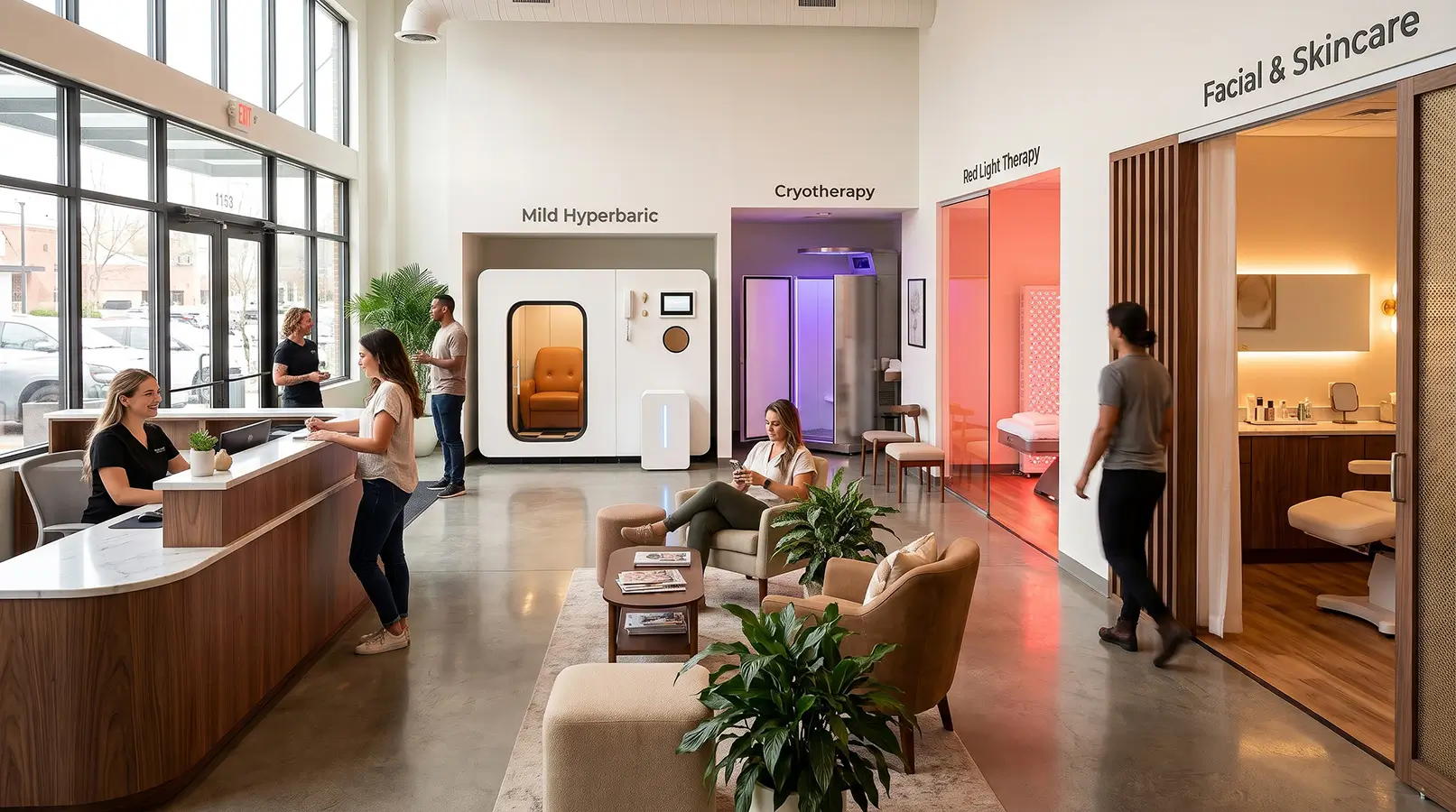
Best Wellness Studio Amenities for Client Retention
A premium studio is judged before the first session begins. Clients notice parking, check-in speed, temperature, privacy, noise, and whether the equipment looks maintained. The best wellness studio amenities are not simply the longest list of recovery modalities. They are the amenities that make a client feel comfortable, confident, and willing to return while allowing staff to operate the business consistently.
For a new recovery studio, every square foot and capital dollar has to perform. For an established facility, the question is often how to improve perceived value without creating a complicated operation. The strongest amenity plan starts with the client journey, then selects equipment, finishes, and operating systems that support it.
Start With the Client Experience, Not the Equipment List
A client’s experience has three phases: arrival, session, and departure. Each phase should feel intentional. If the lobby is polished but the session room is noisy, cramped, or difficult to use, the presentation breaks down. Likewise, a high-performance equipment package can be undercut by slow check-in, unclear instructions, or a lack of private changing space.
Begin by deciding what kind of visit you are building. A membership-based recovery studio may prioritize fast turnover, easy scheduling, and repeatable 30- to 60-minute sessions. A concierge longevity or hospitality concept may place more value on private suites, longer dwell time, premium seating, and a more customized environment. Athletic-performance facilities often need durable finishes, practical changing areas, and equipment that can handle sustained daily operation.
This distinction matters because not every amenity improves every business model. A beautiful tea bar may support a hospitality-led concept, but it can consume valuable floor space in a compact recovery studio. A multi-person session room may improve throughput, while private treatment suites may command a higher price point. The right answer depends on the service model, local market, staffing plan, and utilization targets.
The Best Wellness Studio Amenities Build Comfort Into Every Session
Comfort is operational, not decorative. When clients can settle in quickly and remain comfortable throughout a session, staff spend less time managing avoidable concerns and more time delivering a professional experience.
Private, Well-Planned Session Rooms
Privacy is one of the highest-value amenities in a wellness environment. Individual rooms allow clients to change, decompress, and use equipment without feeling exposed. They also give operators better control of lighting, temperature, sound, and session preparation.
Room planning should account for more than the equipment footprint. Leave appropriate clearance for entry, exit, staff access, cleaning, and service. Consider door swing, ceiling height, HVAC supply and return locations, electrical access, and the path from delivery to final placement. Equipment that technically fits can still create a poor room if clients feel confined or staff cannot work around it safely.
For studios offering hyperbaric wellness sessions, chamber configuration shapes the room plan. A seated or upright chamber can suit clients who prefer reading or working during a session. A reclining configuration supports a more relaxed position. Two-person and walk-in designs can support companion sessions, staff-assisted entry, or a higher-end suite experience, but they require more space and more deliberate throughput planning.
Climate Control, Air Quality, and Acoustic Separation
Temperature is easy to overlook until it becomes a complaint. Recovery equipment, lighting, electronics, and occupancy can all add heat to a room. Independent climate control or well-designed zoning can protect client comfort while keeping staff from constantly adjusting the entire facility.
Air movement should be quiet and controlled. A room that feels stuffy or carries sound from adjacent spaces can undermine otherwise premium equipment. Acoustic insulation, solid-core doors, soft finishes where appropriate, and thoughtful placement of mechanical equipment help preserve privacy. This is particularly valuable when a studio includes equipment with compressors, pumps, fans, or cooling systems.
Premium Seating and Personal Storage
Clients need a place for personal belongings, shoes, and outerwear that does not feel improvised. Built-in lockers, secure cubbies, and a small bench or seating area make arrival and departure easier. In-suite storage is especially useful for private rooms where clients may bring a phone, water bottle, reading material, or recovery accessories.
Within the session itself, seating quality matters. Powered recliners, supportive lounge seating, and adjustable positions can elevate comfort without adding operational complexity. The goal is not excess. It is to remove friction for clients who may be arriving after training, travel, a long workday, or a demanding schedule.
Choose Modalities That Support a Clear Service Menu
A studio should not add equipment simply because a modality is popular. Every piece of equipment should fit a defined service menu, room plan, staffing model, and maintenance schedule. The most effective facilities build around a few high-quality modalities and present them with confidence.
A premium hyperbaric chamber can serve as a flagship amenity because it creates a visible, dedicated session experience. Buyers should compare operating pressure, chamber dimensions, entry style, oxygen delivery capacity, controls, ventilation, communication features, and ease of cleaning. A chamber rated up to 2.0 ATA offers a different performance specification than lower-pressure designs, but pressure rating alone does not determine whether it is right for a facility. Client comfort, staff training, operating procedures, and local requirements also matter.
Complementary modalities can create useful packages when they are operationally compatible. Full-body red-light systems, electric whole-body cold recovery systems, and PEMF wellness mats can support a broader recovery menu without forcing every client into a long, complicated circuit. The strongest combinations have a clear flow: clients know where to go next, staff know how to reset the room, and the schedule has enough buffer for cleaning and transition.
OxyEdge equipment is designed around this practical reality, with commercial-grade hyperbaric configurations and complementary wellness systems intended for professional presentation, staff usability, and repeatable operation. The relevant question for any equipment package is whether it supports the experience a studio has promised, not whether it creates the largest possible modality count.
Technology Should Reduce Staff Friction
Clients appreciate technology when it feels simple. Staff appreciate it when it prevents mistakes. Touchscreen interfaces, automated session controls, visible timers, and standardized presets can help operators deliver a more consistent experience across shifts.
For hyperbaric rooms, clear control access and communication between the client and staff are particularly valuable. Automated controls can reduce repetitive setup tasks, while an intuitive interface can make training more manageable. However, automation does not replace procedures. Studios still need documented operating protocols, opening and closing checklists, cleaning standards, client orientation, and escalation procedures.
Scheduling software and digital intake systems are also amenities in their own right. A client who can book, receive preparation guidance, sign required forms, and check in without confusion experiences the business as more professional. On the operator side, software should help manage room utilization, membership access, staff assignments, and maintenance records.
Operational Amenities Protect Long-Term Value
The less visible parts of a studio often determine whether it remains premium six months after opening. A dedicated utility area, equipment storage, laundry capacity, cleaning supplies, and accessible service clearances keep the client-facing space orderly. Without them, towels, cables, and supplies migrate into hallways and session rooms.
Maintenance planning belongs in the initial equipment decision. Ask about routine cleaning, consumables, service intervals, warranty terms, technical support, replacement-part availability, and expected electrical requirements. Commercial equipment should be selected for the reality of frequent use, not just its appearance on opening day.
Operators should also plan for power, ventilation, noise management, and installation access early. Depending on the equipment selected, a standard electrical circuit may be sufficient, or dedicated circuits and additional facility work may be required. Confirm these details before finalizing a lease or beginning construction. Retrofitting power or HVAC after the rooms are finished is rarely efficient.
Use Hospitality Details With Purpose
Water service, towels, charging access, quality lighting, mirrors, and clean restrooms may sound basic, but they define the level of care clients perceive. These details should be durable, easy to replenish, and consistent with the studio’s price point.
A hospitality-led studio may add a quiet lounge, guided breathwork audio, post-session refreshments, or a retail display. These can be valuable when they reinforce the brand and encourage clients to stay connected to the facility. They are less useful when they distract from the core offer or require staffing the business cannot support.
The most valuable amenity is often confidence. Clients return when the facility feels prepared, the equipment feels substantial, the environment feels private, and every session follows a clear standard. Build the studio around that standard first, then add only the features that make it more credible.