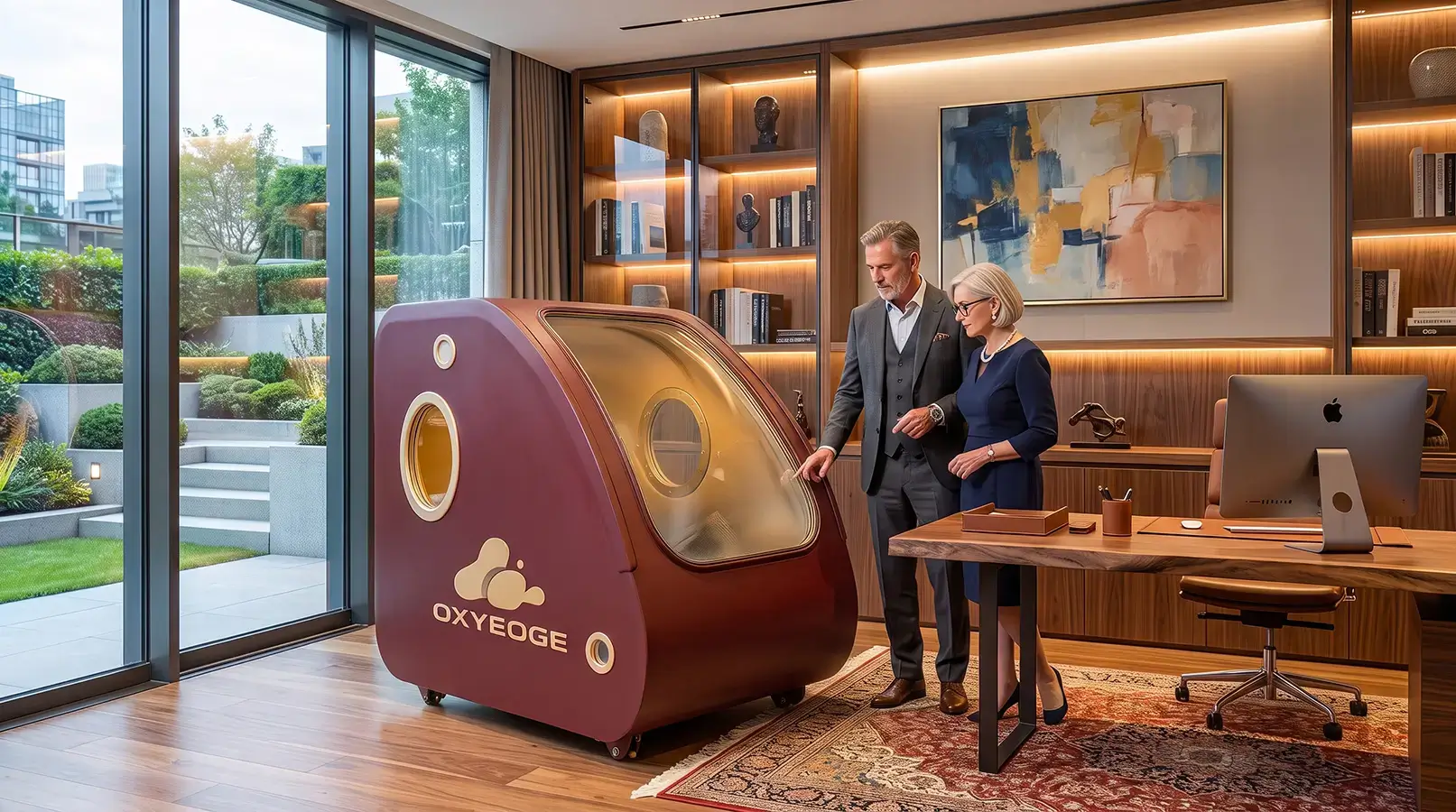
Home Hyperbaric Chambers for Serious Buyers
A dedicated recovery room changes the standard of a home wellness environment. Home hyperbaric chambers bring a commercial-style, controlled session experience into that setting, but the right purchase is not simply about fitting a chamber through the door. It is about selecting a pressure vessel, oxygen delivery configuration, control system, and support plan that will remain dependable for years.
For private buyers, this is a capital-equipment decision. For wellness operators considering a chamber for a founder’s residence, executive suite, or invitation-only client program, the same standard applies: the equipment should look refined, operate predictably, and support a safe, repeatable wellness experience.
What separates premium home hyperbaric chambers
The home market includes everything from flexible, entry-level designs to fully built hard-shell pressure vessels. They serve different buyer profiles. A soft-sided chamber can be appealing where portability and a lower initial investment matter most. A hard-shell chamber is typically the better fit when a buyer values structural permanence, higher available pressure, comfort, climate management, quiet operation, and a finished luxury aesthetic.
The difference becomes obvious over long ownership periods. A commercial-grade hard-shell chamber is designed around repeated pressurization cycles, durable components, a stable internal environment, and user controls that do not require technical improvisation before each session. That matters for a household with multiple users, a high-performance athlete maintaining a regular recovery routine, or a wellness professional who expects guests to use the equipment.
A premium chamber should feel like installed wellness infrastructure, not temporary fitness equipment. The pressure vessel, door hardware, seating or recline position, interior finishes, lighting, and control interface all affect whether people will use it consistently.
Choose the right configuration before comparing features
The best chamber format depends on how the room will be used. A single-person reclined model is efficient for a dedicated recovery suite and can provide a highly private, low-distraction environment. It is often the right choice for buyers who prioritize a compact footprint and a familiar, restorative posture.
A seated chamber changes the experience. It can suit users who prefer to read, work on a tablet, or remain upright during a session. Vertical and walk-in designs also make entry and exit easier for some users, although they require more ceiling clearance and should be evaluated carefully against the room layout.
Two-person models are worth considering when shared sessions are part of the intended experience. They can support spouses, family members, trainers and clients, or a companion who may make a new user more comfortable. The trade-off is straightforward: larger chambers demand more floor space, more attention to access pathways, and a larger upfront investment.
Before narrowing the product list, measure the actual room rather than relying on a floorplan. Account for the chamber footprint, door swing, service access, circulation space, electrical requirements, and delivery route. Stairs, tight hallways, elevators, and finished landscaping can all affect installation planning.
Pressure rating is a performance and ownership decision
Pressure is commonly expressed in ATA, or atmospheres absolute. In the mild hyperbaric category, pressure ratings vary significantly. A chamber rated up to 2.0 ATA represents a different engineering class than a lower-pressure unit, and buyers should understand the rating in the context of vessel construction, controls, operating procedures, and intended use.
Higher pressure capability should not be treated as a marketing checkbox. It affects the design requirements placed on the pressure vessel and the systems that support it. Buyers should ask how the chamber is built, what pressure level it is rated to operate at, how pressure is monitored, and what safety systems are incorporated into routine operation.
It also depends on the user. A buyer seeking a luxury wellness amenity may place more value on interior comfort, touchscreen simplicity, and design integration than on maximum pressure. A performance-focused household may prioritize a hard-shell chamber with a 2.0 ATA rating, consistent oxygen concentrator output, and controls designed for frequent use. Neither approach is automatically better. The right answer comes from matching the specification to the planned experience.
Oxygen delivery, climate control, and controls deserve equal scrutiny
A chamber is only as practical as the systems surrounding the pressure vessel. High-output oxygen concentrators, properly planned oxygen delivery, and easy-to-understand operating procedures are essential parts of the equipment package. Buyers should look beyond a generic claim of oxygen compatibility and ask what concentrators are included, how they are configured, and what ongoing service expectations apply.
Climate control is another major differentiator. A session can feel substantially different when temperature, airflow, and humidity are managed well. This is especially relevant in warm climates, enclosed wellness rooms, and homes where the chamber may operate back-to-back for multiple users.
Touchscreen control is valuable when it simplifies the experience rather than adding novelty. A well-designed interface can guide startup, display session information, support consistent operation, and reduce the need for users to manage multiple separate devices. OxyEdge OS™ is an example of an integrated chamber-control approach built around operational clarity, rather than asking the owner to assemble a session from disconnected components.
Comfort features should be evaluated with the same discipline. Electric recliners, massage seating, integrated red light, entertainment options, and premium interior finishes can improve the user experience. They do not replace sound engineering, but they may determine whether the chamber becomes a regular part of a home wellness routine.
Plan the installation as carefully as the purchase
Home installation begins well before delivery day. A serious supplier should help the buyer understand site requirements, delivery coordination, electrical needs, ventilation considerations, room dimensions, and access limitations. That planning protects both the investment and the property.
Most buyers benefit from choosing a dedicated room with stable temperature, adequate clearance, and straightforward access. Garages, converted offices, basement wellness suites, and purpose-built recovery rooms can all work, provided the environment supports the equipment and the delivery plan is realistic.
The room should also support the experience. A hard-shell chamber is visually substantial. Give it enough space to look intentional, allow comfortable movement around it, and make entry and exit easy. Premium equipment placed in a cramped utility corner may still function, but it will not deliver the polished experience most buyers expect from this level of investment.
Safety education is part of premium ownership
Mild hyperbaric chambers are wellness equipment and are not intended to diagnose, treat, cure, or prevent disease. Responsible suppliers should be disciplined about that distinction and should not frame a chamber as a substitute for medical care or prescribed treatment.
Safe operation also requires training, written procedures, and clear guidance on approved use. Buyers should understand the manufacturer’s expectations for clothing, personal items, oxygen use, chamber cleaning, inspection intervals, and what to do if a user experiences discomfort. A quality provider should not disappear after delivery; technical support and education are part of the ownership model.
Ask direct questions before purchasing. What warranty applies to the pressure vessel and supporting systems? Who provides service if an issue occurs? Is U.S.-based technical support available? What training is provided at handoff? How are replacement parts, filters, and scheduled maintenance handled? Clear answers are a strong indicator that the equipment is built for long-term ownership rather than a short sales cycle.
Think beyond the first year
The lowest purchase price is rarely the lowest cost of ownership. A chamber that lacks support, needs frequent workarounds, or becomes uncomfortable to use can quickly lose its value. Conversely, a well-engineered system with durable construction, practical controls, and accessible support can remain a central feature of a premium home wellness environment for years.
For operators, this perspective is even more important. A home installation may become the reference point for a future recovery studio, hospitality offering, or private-membership concept. Choosing equipment with commercial-grade design, established training resources, and a professional presentation provides continuity as the wellness program grows.
The most useful next step is not to chase the longest feature list. Define the room, the users, the expected frequency of use, and the ownership standard you are unwilling to compromise. Those decisions will point you toward a home hyperbaric chamber that belongs in the space and continues to earn its place there.
Source: https://oxyedge.ai/home-hyperbaric-chambers-serious-buyers