How to Start a Hyperbaric Wellness Business
A premium recovery business is not built around a chamber sitting in a spare room. It is built around a controlled, repeatable guest experience: a polished intake, a comfortable session, trained staff, clear wellness positioning, and equipment that looks and performs like a long-term commercial asset. If you plan to start a hyperbaric wellness business, the decisions made before your first session will determine whether the service becomes a flagship revenue category or an underused piece of equipment.
Mild hyperbaric wellness can fit naturally into recovery studios, athletic-performance facilities, boutique gyms, luxury hospitality concepts, and membership-based wellness centers. The opportunity is strongest when hyperbaric sessions are not treated as a novelty. They should be designed as part of a disciplined recovery offering with clear operations, thoughtful scheduling, and an environment clients want to return to.
Start With a Defined Hyperbaric Wellness Business Model
Before selecting a chamber, define what the business is selling. A high-end recovery studio may use mild hyperbaric sessions as a standalone premium service, while an athletic facility may package them with red light, cold wellness, compression, mobility work, or PEMF sessions. A hospitality property may position the experience as a private amenity for guests. Each model creates different demands for throughput, staffing, privacy, and equipment configuration.
The first question is not simply, “What chamber should I buy?” It is, “Who is booking this session, and what does the visit need to feel like?” A busy studio serving athletes before and after training may need predictable session turnover and durable, easy-to-clean finishes. A concierge wellness concept may prioritize a spacious walk-in chamber, climate control, luxury seating, and a private recovery suite.
Your pricing structure should match the experience. Single sessions can introduce clients to the modality, but packages and memberships generally create more predictable utilization. Consider the entire appointment block, not only time under pressure. Intake, chamber preparation, client orientation, pressurization, depressurization, and room reset all affect the number of appointments available each day.
Choose Equipment for Sustained Commercial Operation
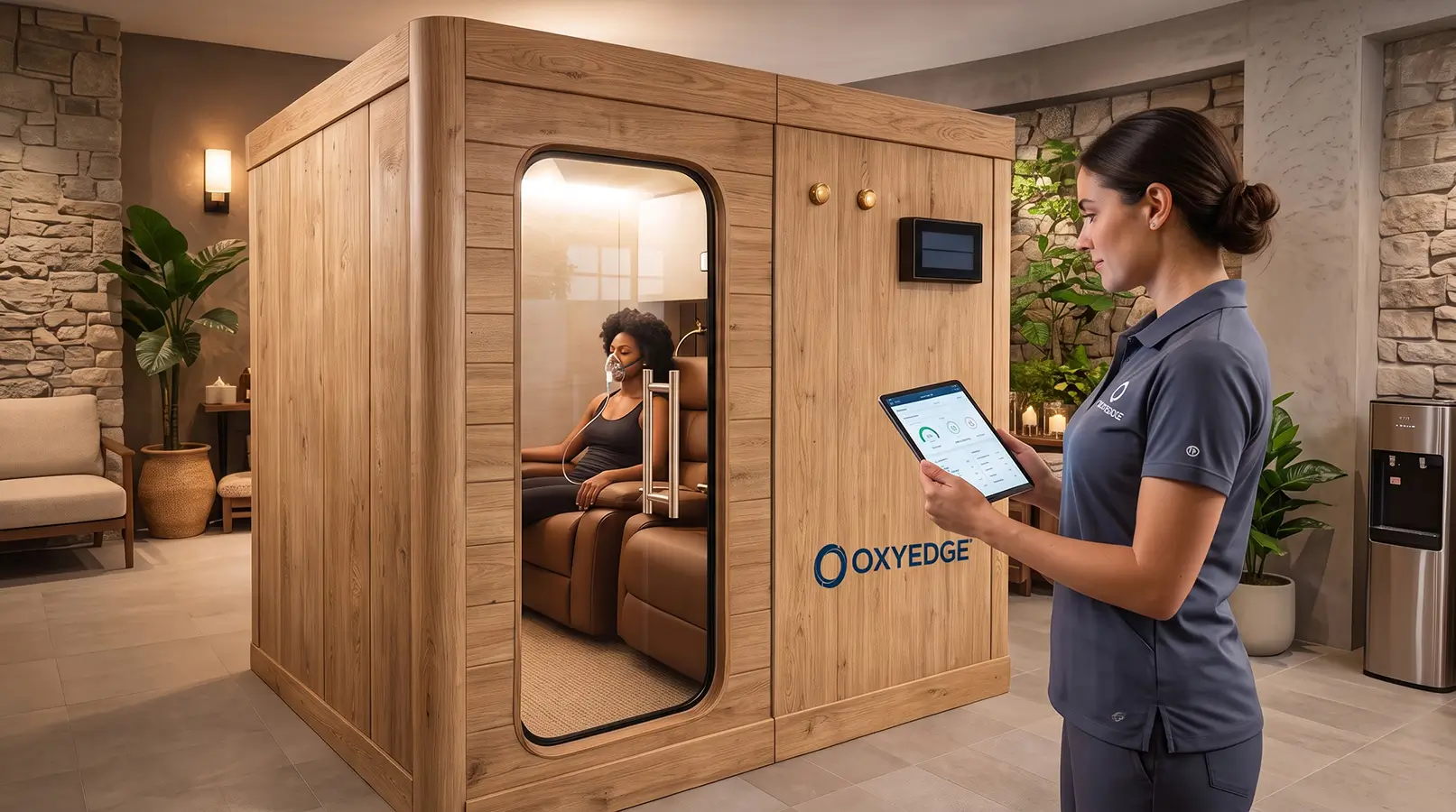
A commercial wellness operation needs more than an entry-level chamber. Your equipment must support frequent use, present well in a premium environment, and give staff straightforward control over each session. Hard-shell mild hyperbaric chambers are often favored by serious operators because they can offer a refined customer experience, durable construction, integrated controls, and a more substantial visual presence than temporary-looking equipment.
Pressure rating matters, but it is only one part of the purchasing decision. Evaluate the full operating system: the pressure vessel, oxygen concentrator capacity, air circulation, climate control, interior comfort, communication features, controls, service access, and warranty coverage. A chamber operating at up to 2.0 ATA may be appropriate for certain non-medical wellness environments, but the right configuration depends on your concept, state and local requirements, operating procedures, and intended client experience.
Chamber format also affects revenue potential. A single-person reclined unit can be an efficient option for private sessions and limited footprints. Seated or vertical chambers may support clients who prefer an upright position. Two-person and walk-in models can create a more social, hospitality-forward experience, though they require more floor space and more deliberate scheduling. The best choice is rarely the largest chamber available. It is the chamber that fits your utilization assumptions, room layout, and service model.
Premium details should not be dismissed as cosmetic. Touchscreen control, quiet climate management, electric recliners, integrated red light, massage seating, and a clean modern enclosure can improve perceived value and client comfort. In a luxury wellness business, comfort helps protect session retention.
Design the Room Around Safety, Comfort, and Flow
A hyperbaric suite should feel intentional from the moment a client enters. Avoid placing a premium chamber in a cluttered multipurpose room with visible storage, exposed cords, or constant traffic. The setting should reinforce a calm, professional recovery experience while giving staff adequate working space around the equipment.
Plan for electrical requirements, ventilation, accessible entry, cleaning access, client seating, and emergency procedures before delivery. Confirm the room dimensions, door clearances, floor loading, and installation path early. A walk-in or larger hard-shell chamber can be a significant piece of capital equipment, and a failed delivery plan can delay opening or create unnecessary cost.
Develop written operating protocols with your supplier, local authorities where applicable, and qualified professionals. These should cover pre-session screening, prohibited items, oxygen-handling practices, client monitoring, cleaning, emergency response, and documentation. Staff should know when not to proceed with a session and how to escalate questions.
Mild hyperbaric chambers in a wellness setting must be positioned carefully. They are wellness equipment and are not intended to diagnose, treat, cure, or prevent disease. Your marketing, staff language, intake materials, and client conversations should remain consistent with that boundary. Avoid disease claims, medical promises, or language that suggests your center is providing medical HBOT unless you operate under the appropriate medical structure and standards.
Build a Service Menu Clients Can Understand
The strongest wellness menus are simple enough to explain in one conversation. A client should understand what the session includes, how long it takes, what the environment feels like, and how it fits into the center’s broader recovery experience.
Rather than creating a complicated menu of near-identical options, organize services around distinct use cases. A post-training recovery appointment may combine a mild hyperbaric session with red light or PEMF. A premium monthly membership may include a set number of private recovery sessions. A hospitality package may pair a chamber session with cold wellness and a quiet recovery lounge.
Bundling can increase average revenue per visit, but only when the operational sequence makes sense. A client should not feel rushed from one modality to another, and staff should not be forced into an unmanageable reset schedule. Test your ideal service flow before publishing it. Timing that looks efficient in a spreadsheet can feel cramped in a real facility.
Train Staff to Deliver a Consistent Experience
Your staff is part of the equipment investment. Even a flagship chamber can feel intimidating if the operator appears uncertain. Training should cover chamber functions, client orientation, contraindication awareness, session monitoring, cleaning, emergency procedures, and appropriate non-medical language.
The goal is not for every team member to deliver a technical lecture. The goal is for every client to receive calm, consistent direction. Staff should be able to explain what will happen during pressurization, how clients can communicate during the session, what comfort adjustments are available, and why the center follows specific safety rules.
Assign ownership internally. One manager should be responsible for checking utilization, maintenance logs, supply needs, staff compliance, and client feedback. This prevents a high-value asset from becoming nobody’s responsibility after launch.
Model Revenue Conservatively Before You Buy
Hyperbaric wellness equipment should be evaluated as a business asset, not a lifestyle purchase. Build a conservative model using realistic occupancy, not full schedules from day one. Account for the chamber cost, room build-out, electrical work, delivery, installation, insurance, payroll, training, marketing, cleaning, maintenance, and financing if applicable.
Then calculate the number of paid sessions required to cover monthly operating costs and support your desired return. Run several scenarios: a slow launch, a steady membership model, and a high-utilization model. This will reveal whether a single-person chamber, multi-user chamber, or broader multi-modality recovery suite best supports your goals.
Do not assume that more capacity automatically produces better economics. A larger chamber may command a higher rate or support multiple users, but only if your market values that format and your team can fill the schedule. Conversely, a private single-user experience may justify strong pricing in a luxury market with the right design and service standards.
Select a Supplier That Supports the Launch
The purchase process should include more than a product specification sheet. Look for clear information on pressure capability, chamber configuration, delivery coordination, warranty terms, technical support, installation resources, and staff education. U.S.-based support can be particularly valuable when your business depends on uptime and client confidence.
For operators building a commercial-grade recovery environment, OxyEdge offers hard-shell mild hyperbaric chambers with configurations ranging from single-person and seated units to two-person and walk-in designs, alongside complementary red light, cold wellness, and PEMF equipment. A unified equipment strategy can simplify the design of a premium recovery suite and help create a more cohesive client journey.
The first months after opening are where your operating model becomes real. Track which sessions sell, when clients book, where staff lose time, and what questions clients ask most often. Use those observations to refine your schedule, packages, and room experience. A well-run hyperbaric wellness business does not rely on bold claims or passing trends. It earns repeat visits by making every session feel safe, comfortable, premium, and worth scheduling again.
Source: https://oxyedge.ai/start-a-hyperbaric-wellness-business