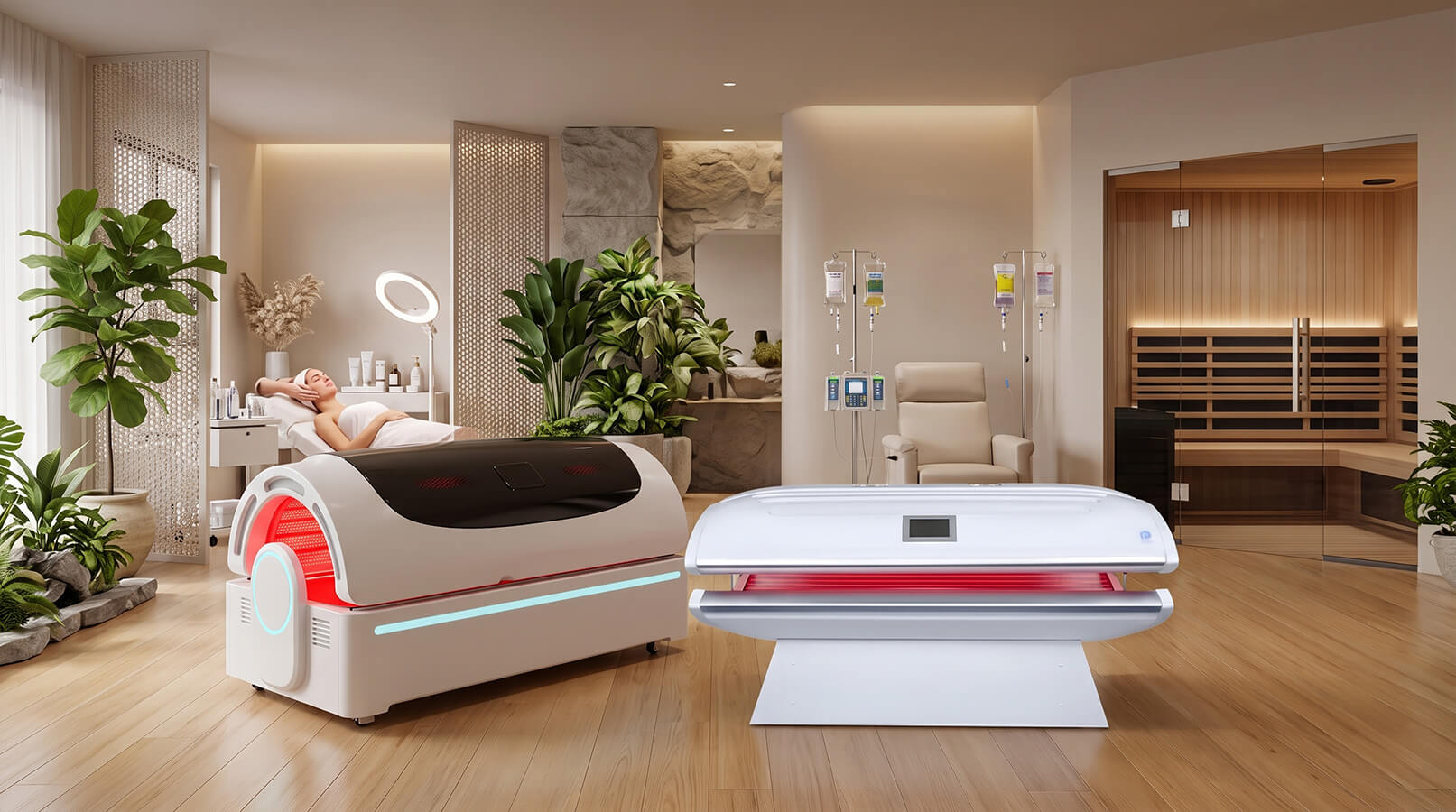
Full Body Red Light Therapy Bed Buying Guide
A full body red light therapy bed is not simply a larger panel with a luxury finish. For a recovery studio, performance facility, or hospitality property, it is a customer-facing revenue asset that must deliver a comfortable, repeatable session while standing up to sustained operation. The right system can strengthen a premium wellness menu. The wrong one can create bottlenecks, inconsistent experiences, and a difficult support burden for staff.
The purchasing decision should begin with how the bed will operate in your facility, not with a wavelength claim or a dramatic product photo. Output architecture, coverage, controls, ventilation, session turnover, service access, and the quality of the enclosure all shape whether the equipment performs like a commercial asset over time.
What a Full Body Red Light Therapy Bed Is Designed to Do
A full body red light therapy bed is an enclosed or semi-enclosed system that positions light sources around the user to provide broad, relatively even whole-body exposure during a timed session. Most premium systems combine red light and near-infrared light. Red wavelengths are visible, while near-infrared wavelengths are not visible to the eye but are commonly included in wellness-oriented light systems.
For operators, the practical advantage is coverage. A full-body format can create a more polished and efficient experience than asking a member to reposition in front of several smaller panels. That matters in a paid-session environment, where the customer expects privacy, comfort, and a process that feels intentional from check-in to exit.
These systems should be positioned responsibly. Red light equipment is wellness equipment and is not intended to diagnose, treat, cure, or prevent disease. Facility marketing should avoid promising clinical outcomes or presenting sessions as a substitute for medical evaluation or treatment.
The Specifications That Matter Before You Buy
Not every technical number carries equal weight. A high-output claim without information about coverage, distance, session controls, or thermal management does not tell an operator much about daily usability. Ask vendors to explain the complete operating environment.
Wavelength configuration and coverage
Red and near-infrared configurations vary by manufacturer. Rather than treating one wavelength combination as universally superior, evaluate whether the system is designed for balanced, full-body coverage at the user position. The layout of the emitters, the geometry of the bed or enclosure, and the distance from the body all influence the session experience.
A full-body bed should minimize obvious weak zones across the front, sides, and back of the user. If the equipment has separate upper and lower arrays, ask whether they can be controlled independently and whether output consistency is verified across both sections. A system that looks impressive when open may still leave meaningful coverage gaps once a user is lying inside it.
Output, irradiance, and session design
Irradiance is often presented as the headline metric, but it must be interpreted in context. Measurements can vary based on testing distance, meter type, angle, and the portion of the array being measured. A serious equipment partner should be able to discuss where and how readings were taken rather than relying on a single peak number.
For a commercial operator, controllability is as valuable as raw output. Look for adjustable session duration, simple user-facing controls, clear timer behavior, and presets that staff can explain in a few seconds. The best experience is not the one with the most complicated protocol. It is the one that can be delivered consistently during a busy operating day.
Thermal management and customer comfort
High-output light systems generate heat. That does not automatically make a bed unsuitable, but poor ventilation can make a short session feel uncomfortable, especially in a warm studio or after training. Evaluate airflow, interior temperature management, fan noise, and the location of vents relative to the user.
Comfort details have direct operational value. A well-designed bed should feel stable, easy to enter, and easy to clean. Consider the quality of the acrylic or enclosure materials, interior room, handles, face cooling if included, and the ability for a user to exit without staff assistance. These details affect reviews, repeat bookings, and the amount of staff attention each session requires.
Controls, cleaning, and uptime
Consumer equipment can be acceptable for light home use, but it may not be built for a studio schedule. Commercial deployment calls for durable hinges, reliable electronics, intuitive touchscreen or console control, replaceable components, and practical service access.
Ask how the system handles a power interruption, what maintenance is required, and which parts are expected to wear over time. Also ask who answers the phone when the equipment needs support. U.S.-based technical support, documented warranty coverage, and access to replacement parts can be more valuable than a small difference in purchase price.
Match the Bed to Your Facility Model
A full body red light therapy bed fits differently in a membership gym than it does in a five-room recovery studio. Before selecting a model, map the complete session cycle: check-in, room reset, user education, session time, cleaning, and rebooking. A 15-minute appointment may occupy the room for 20 minutes once turnover is included.
For a boutique wellness center, a horizontal bed can serve as a flagship amenity in a dedicated private room. The presentation supports premium session pricing and package upgrades, particularly when paired with other complementary wellness services. Privacy, lighting, room design, and a simple intake process all contribute to the perceived value.
For a gym or athletic-performance facility, throughput and durability may take priority over spa-style presentation. The equipment should be easy for staff to supervise, simple for members to understand, and built for frequent use. A facility that expects back-to-back appointments should pay close attention to cleaning surfaces, cooling performance, and the speed of the control interface.
Luxury hospitality properties have another layer to consider: design integration. The bed should complement the visual standard of the spa, recovery lounge, or fitness floor. A premium enclosure, quiet operation, and a polished onboarding experience can matter as much as the specifications because guests are evaluating the entire environment.
Home buyers generally have more scheduling flexibility, but they should still assess footprint, electrical requirements, ceiling clearance, delivery access, ventilation, and who will provide setup guidance. Commercial-grade construction is attractive for long-term ownership, although a larger system is not automatically the best fit for every private space.
Build a Repeatable Session Experience
The revenue opportunity does not come from placing a bed in an unused room. It comes from creating a session that staff can operate confidently and members understand immediately. That starts with an orientation covering the timer, eye-protection guidance where applicable, comfort controls, and what the customer can expect from the room experience.
Keep wellness language disciplined. Train staff to describe the service as a red light wellness session, not as a treatment for a diagnosis, injury, or medical condition. When customers have health questions, medication concerns, photosensitivity concerns, or active medical care, staff should encourage consultation with an appropriate licensed healthcare professional.
A concise operating procedure should cover cleaning between sessions, equipment inspection, user positioning, late arrivals, session cancellation, and escalation to management if the system displays an error. These processes protect the customer experience and prevent a high-value asset from becoming dependent on one highly trained employee.
OxyEdge approaches this category as premium, commercial-grade wellness equipment: a system should look exceptional on the floor while remaining practical for staff, supportable over the long term, and appropriate for a serious non-medical wellness environment.
Questions to Ask a Vendor Before Signing
A productive vendor conversation goes beyond price. Request clear answers about the unit's physical dimensions, weight, electrical requirements, lead time, shipping process, installation expectations, warranty terms, and ongoing support. If you are opening a new center, ask whether the supplier can provide operational education and business-development resources in addition to equipment delivery.
You should also clarify whether the quoted price includes accessories, eye protection where applicable, training, freight, placement, or installation support. Capital equipment quotes can look comparable until these details are separated. The lowest initial number may not represent the lowest ownership cost if it creates service delays, replacement-part uncertainty, or inadequate staff training.
Finally, evaluate the vendor's confidence in sustained commercial use. Ask about expected daily operating volume, cleaning compatibility, component replacement procedures, and how support requests are handled. A premium bed is meant to enhance your brand, but it also needs a practical path to uptime when the facility is full.
The most effective choice is the system that fits your room, your staff capacity, and the caliber of experience your customers already expect. Treat the purchase as part of your operating model, and the full-body session can become a polished reason for members and guests to return.
Source: https://oxyedge.ai/full-body-red-light-therapy-bed-buying-guide