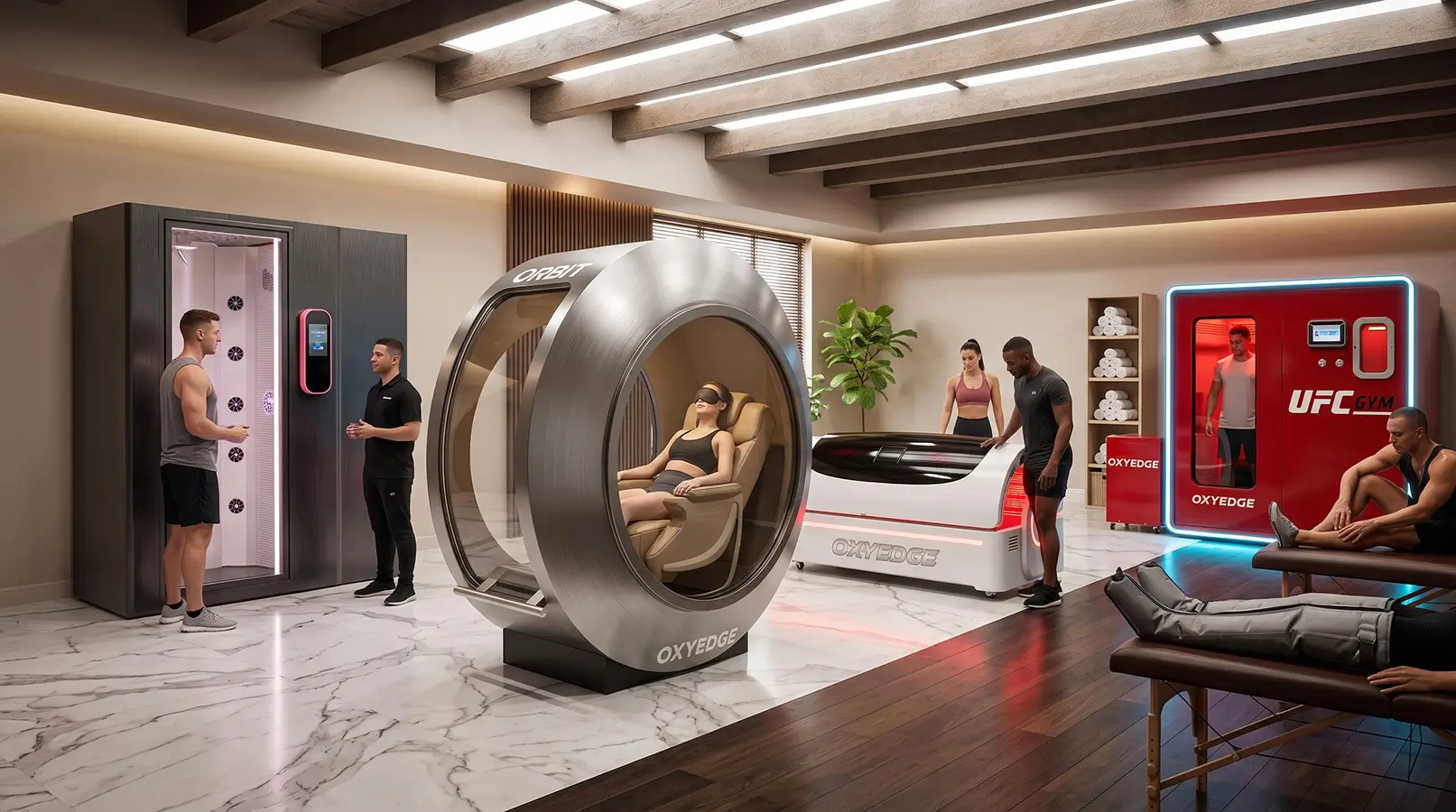
Athletic Performance Recovery Equipment Choices
A recovery room can look impressive and still underperform. The difference is rarely one dramatic feature. It is whether the athletic performance recovery equipment creates a reliable, premium session that members want to repeat and staff can run without friction. For performance facilities, boutique studios, luxury clubs, and hospitality concepts, equipment selection is an operational decision as much as a design decision.
The right mix should support your client profile, available square footage, staffing model, and revenue plan. It should also present as a serious capital asset: comfortable enough for premium positioning, durable enough for sustained operation, and intuitive enough that the customer experience remains consistent from the first session to the thousandth.
Start With the Recovery Experience You Intend to Deliver
Equipment should not be selected as a collection of isolated modalities. Begin by defining the experience your facility is selling. A private, appointment-based recovery studio has different requirements than a high-volume athletic club, a members-only performance center, or a luxury hotel wellness suite.
A facility serving endurance athletes may prioritize quiet, reclined sessions and a calm environment after long training blocks. A strength and conditioning operation may need faster turnover, simple staff workflows, and equipment that fits between training appointments. A hospitality property may place more weight on finish quality, visual impact, and guest ease of use. None of those priorities are wrong, but each changes what constitutes a sound equipment investment.
This is where owners can avoid a common mistake: buying the most talked-about modality before deciding how it will be scheduled, supervised, maintained, and priced. A premium recovery offering is built around repeatability. If a session requires excessive resets, complex explanations, or constant troubleshooting, the equipment may be technically capable but commercially inefficient.
Athletic Performance Recovery Equipment Should Be Evaluated as a System
Recovery modalities can complement one another, but only when the room layout and session flow make practical sense. Mild hyperbaric chambers, whole-body cold wellness systems, full-body red-light beds and enclosures, and PEMF wellness mats each create a distinct user experience. Their value rises when an operator can organize them into a clear, staff-manageable menu rather than asking clients to navigate a confusing collection of machines.
For example, a quiet, climate-controlled mild hyperbaric session may fit naturally into a longer premium appointment, especially when the chamber offers comfort features such as an electric recliner, touchscreen control, integrated entertainment options, or a spacious walk-in configuration. A red-light or PEMF session may offer a different time profile and can help a facility create shorter service options, memberships, or add-ons. Cold wellness systems can add an immediate, high-energy component, but require careful consideration of cleaning procedures, circulation space, and client education.
The goal is not to force every modality into one room. It is to build a service pathway that feels intentional. Consider whether clients will book one modality, follow a guided multi-modality sequence, or access the room through a membership. Then determine how long each appointment lasts, how much buffer time is required, and where staff involvement is necessary.
Capacity Is More Than the Number of Seats
A two-person chamber may increase session capacity, but its business value depends on whether clients are likely to book together and whether the facility has enough demand to keep both positions utilized. A single-person chamber can deliver greater privacy and scheduling flexibility. A seated or vertical configuration may suit clients with mobility preferences or facilities working with limited floor space, while reclined models can elevate comfort during longer sessions.
Likewise, a full-body red-light bed may create a strong flagship visual, but it needs sufficient room for client entry, cleaning access, and a polished transition between users. Equipment dimensions matter, yet the usable footprint matters more. Plan for doors, walkways, electrical access, HVAC needs, service clearance, and the space required for a staff member to assist without making the room feel crowded.
Engineering and Controls Matter in Commercial Use
For operator-focused buyers, specifications are not decoration. They indicate whether equipment is prepared for frequent use and whether the ownership experience will match the premium price point.
With hard-shell mild hyperbaric chambers, assess the pressure vessel design, operating pressure, oxygen concentrator output, climate management, control interface, seating configuration, and entry design. A chamber rated up to 2.0 ATA addresses a different performance category than lower-pressure equipment, but pressure alone should not determine the decision. The complete system matters: how comfortably the chamber operates, how easily a user can communicate, how intuitively a team can manage sessions, and how consistently the equipment performs over time.
Touchscreen control is particularly valuable in a commercial environment when it reduces operator guesswork. A platform such as OxyEdge OS™ can centralize chamber functions into a more disciplined workflow, helping staff manage sessions with less reliance on memory or manual adjustments. That is not merely a convenience feature. It supports training consistency when multiple employees operate the equipment across long business hours.
For every modality, ask practical questions before purchase:
- What does routine cleaning and reset require between clients?
- Which components are expected to wear, and how are replacements handled?
- What electrical, ventilation, and environmental conditions are required?
- How is staff training delivered, and what does ongoing technical support look like?
- Is the equipment designed for the actual frequency of use projected in the business plan?
These answers can be more consequential than a feature comparison on a brochure. A lower initial equipment cost can become expensive if uptime is unreliable, support is difficult to reach, or the client experience deteriorates under sustained use.
Comfort Protects Both Retention and Throughput
Athletes and members may arrive because of performance goals, but they return because the experience feels worthwhile. Comfort is therefore an operating variable, not an afterthought.
Within a mild hyperbaric chamber, temperature control, seating quality, interior space, visibility, and interface simplicity can shape whether a client views the session as restorative private time or an inconvenience to endure. In a premium setting, the difference is visible. A commercial-grade hard-shell chamber with a refined interior, dependable climate control, and a well-designed recliner supports a more elevated session than an improvised setup that feels clinical, cramped, or difficult to use.
The same principle applies to red-light and PEMF equipment. Entry and exit should be easy. Controls should be legible. Surfaces should be designed for frequent cleaning without losing their finish. The room should feel composed, with lighting, storage, towels, and sanitation materials planned before the first client arrives.
Luxury does not mean excess. It means that the client notices the operation is prepared. That confidence makes it easier for staff to communicate value, protect session timing, and encourage repeat bookings.
Keep Wellness Positioning Clear and Credible
Recovery equipment can be a compelling part of a performance and wellness environment without being presented as medical treatment. Operators should use disciplined language in staff training, service menus, waivers, and marketing materials.
Mild hyperbaric chambers and complementary modalities should be positioned as non-medical wellness equipment. They are not intended to diagnose, treat, cure, or prevent disease. Staff should avoid promising outcomes, making condition-specific claims, or treating equipment sessions as substitutes for medical care. Clients with questions about health conditions, medications, or suitability should be directed to a qualified healthcare professional.
This clarity protects the brand and improves the customer experience. It gives staff a consistent way to explain what the equipment is, what the session involves, and what clients can reasonably expect from the environment itself: privacy, comfort, professional guidance, and well-maintained equipment.
Build the Financial Model Before You Build the Room
A recovery room should be evaluated with the same discipline as any other revenue-producing area. Model your expected session price, membership inclusion, staffing time, average utilization, cleaning interval, financing costs, and realistic ramp period. Do not assume that a premium modality will be fully booked simply because it is visually impressive.
At the same time, avoid evaluating return on investment only through direct per-session revenue. A flagship chamber or full-body red-light system may help differentiate memberships, increase retention, create high-value package upgrades, and strengthen the facility's overall presentation. Its contribution can be both measurable and strategic.
The most durable approach is to start with conservative utilization assumptions. Determine how many sessions each system can actually support per day after accounting for reset time, staff coverage, and client arrival patterns. Then consider whether the configuration can expand with demand. A well-planned first installation leaves room to add capacity without redesigning the entire operation.
Choose a Partner That Supports Ownership, Not Just Delivery
Premium athletic performance recovery equipment requires more than freight coordination. Buyers should expect clear installation requirements, operator education, warranty terms, technical support, and practical guidance for putting the equipment into service. For newer operators, business-development resources and launch support can be as valuable as a product specification sheet.
The right equipment should give your clients a reason to stay longer, return more often, and associate your facility with a higher standard of care in a non-medical wellness setting. Build around that standard first, and the room will have a far better chance of earning its floor space every day.
Source: https://oxyedge.ai/athletic-performance-recovery-equipment